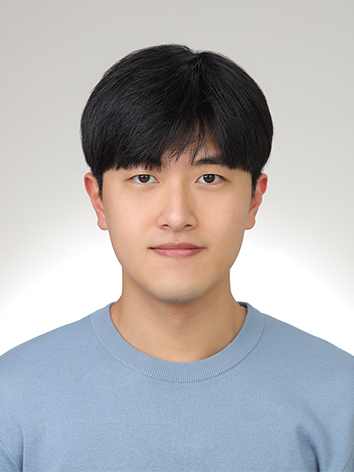
I am a PhD student in Electrical and Computer Engineering at Arizona State University, advised by Prof. Ahmed Alkhateeb. My research focuses on data-driven design of next-generation wireless networks, from foundation models that learn transferable representations of wireless signals to digital-twin assisted system optimization, with a particular focus on the intersection between communications and machine learning. I aim for approaches that stay close to real-world implementations.
Recent News [all]
- LWM-TF, a wireless foundation model on 5G NR time-frequency resource grids, is available on arXiv
- Digital Twin-Aided Prescreening for MU-MIMO user scheduling is available on arXiv
- Started a summer internship at the Wireless Lab, InterDigital in Philadelphia, PA
- Presented LWM-Spectro at IEEE ICC 2026 in Glasgow, UK
- LWM-Spectro accepted to appear at IEEE ICC 2026
- CSIT-free FDD MIMO for IoT published in IEEE Internet of Things Journal (Early Access)
- Downlink FDD MIMO ISAC without CSI feedback published in IEEE Transactions on Wireless Communications
- Presented Robust Precoding and RSMA for FDD Massive MIMO at ISIT 2025 in Ann Arbor, MI
Research Themes
Foundation Models for Wireless Signals
Wireless receivers are built from task-specific pipelines that are trained or tuned one task at a time, even though the received signals they process share common structure. I build large-scale self-supervised foundation models that learn transferable representations directly from received signals, from baseband spectrograms to 5G NR resource grids, so that a single pre-trained encoder supports many downstream tasks such as modulation classification, link-quality prediction, mobility detection, and impairment detection, especially when labels are scarce.
LWM-TF (arXiv'26) · LWM-Spectro (ICC'26)
Digital Twin-Aided Wireless Communications
Acquiring channel information for every user and every decision is costly in multi-user systems. I use site-specific digital twins of the propagation environment to anticipate channel behavior and reduce this overhead, e.g., prescreening candidate users before MU-MIMO scheduling.
Digital Twin-Aided Prescreening (arXiv'26)
FDD Massive MIMO and ISAC Without CSI Feedback
Downlink CSI feedback is a major source of overhead and latency in FDD massive MIMO. I design transmission schemes that reconstruct downlink channels from uplink pilots and remain robust to the resulting errors through rate-splitting multiple access and error-covariance-aware precoding, and extend them to integrated sensing and communications (ISAC) and low-latency IoT.
Downlink FDD MIMO ISAC (TWC'25) · Splitting Messages in the Dark (TWC'25) · CSIT-Free IoT MIMO (IoT-J'25) · Robust Precoding and RSMA (ISIT'25) · FDD MIMO ISAC (WiOpt'24)